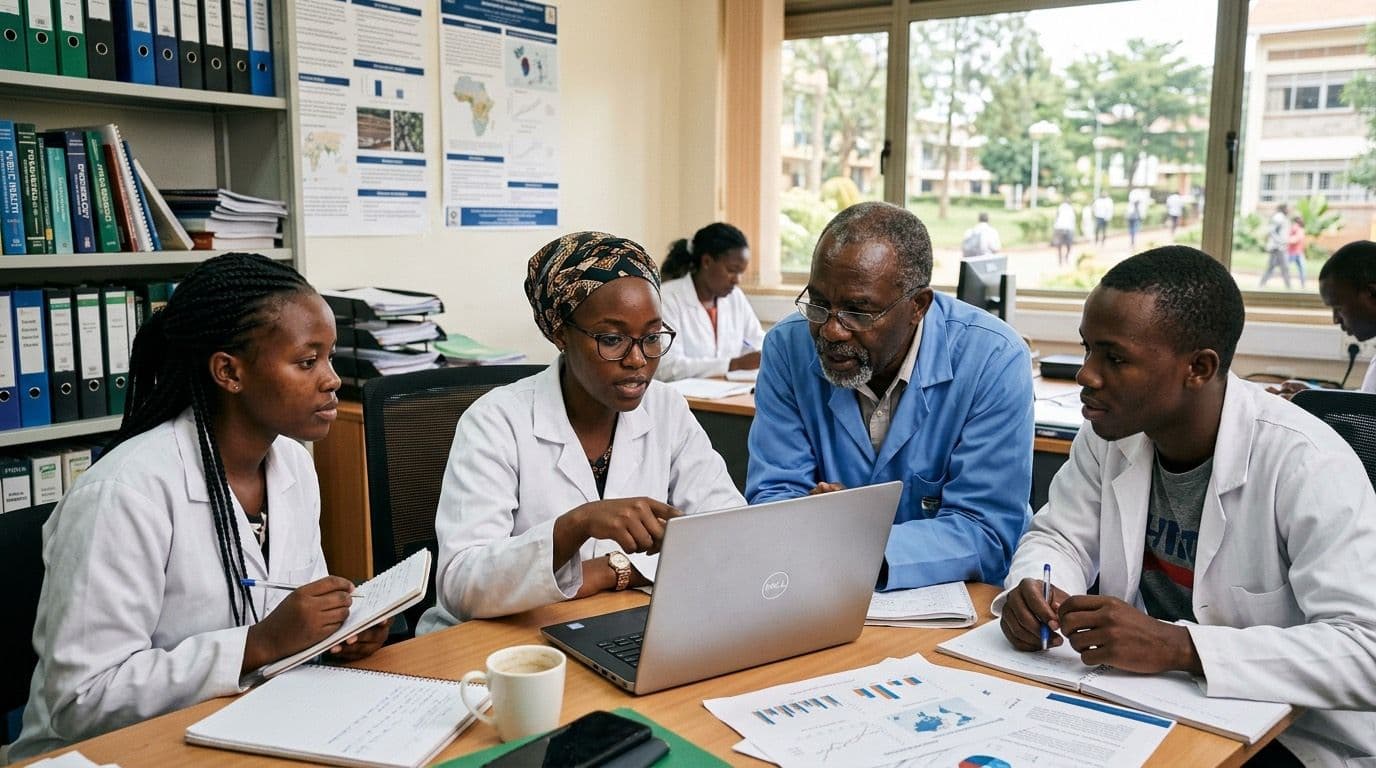
Evidence From Research That Informs Policy and Practice
A curated library of peer-reviewed research, evaluations, and knowledge products linked to CHWRI leadership and partners — spanning maternal and newborn health, oncology nursing, community systems, mental health, and health systems strengthening in Ghana and across Africa.
33
Publications catalogued
Peer-reviewed and linked research outputs
9
Prof. Lydia Aziato
Oncology nursing, pain & maternal health
10
Dr. Raymond Aborigo
Maternal, newborn & respectful care
6
Dr. Mohammed Ali
Evaluation, RMNCAH & systems research
Publications listed here are drawn from the approved scholarly records of CHWRI Board Directors and affiliated research partners. Each card links to the publisher DOI or open-access page.
Publications catalogue
Featured research appears first. Search by title, author, journal, theme, or DOI — and filter by type or CHWRI board contributor.
Type
Contributor
Showing 33 of 33 publications
Featured
Highlighted research
7 featured
All other publications
Complete catalogue
26 publications
Research leadership connected to CHWRI
These profiles anchor the publications library in the Centre’s governance and scientific community.
Governance & institutional documents
Official documents that define how CHWRI is constituted, governed, and held accountable. Click to view or download.
CHWRI Constitution
The founding constitution setting out the Centre's legal identity, governance structure, membership, and operating principles.
Available shortlyGovernance & Board Charter
Roles, responsibilities, and decision-making framework for the Board of Directors and management of CHWRI.
Available shortlyCode of Conduct & Ethics Policy
Standards of integrity, safeguarding, and ethical conduct that guide CHWRI staff, partners, and research activities.
Available shortlyReports, data briefs & toolkits
Institutional download resources. Live PDFs can replace these placeholders as documents are cleared for public release.

Contribute to Our Research
We collaborate with universities, NGOs, district health teams, and communities. Share an idea, propose a study, or explore co-authorship and knowledge exchange.